Shirley Temple as a Child Star: The Years Behind the Dolls
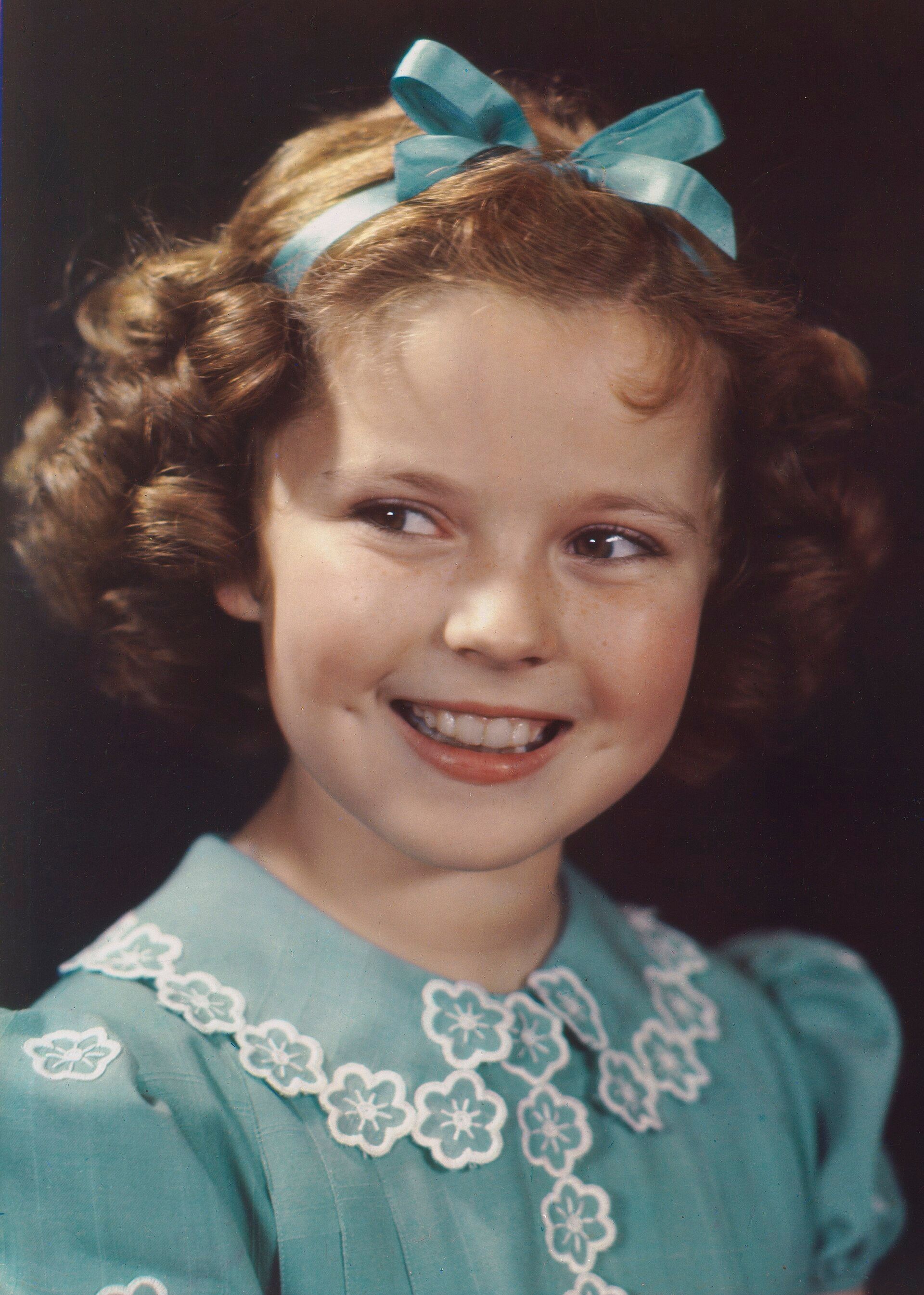

Shirley Temple was born in Santa Monica on April 23, 1928, made her first films in the Baby Burlesks shorts as a three-year-old, and broke through with Fox in 1934. She was Hollywood's top box-office draw for most of 1934–1938, which is exactly when Ideal's composition Shirley Temple dolls were made and sold. Her popularity faded after 1939, and she formally retired from films in 1950.
Almost every vintage Shirley Temple doll is a souvenir of a specific stretch of her childhood. The composition dolls belong to roughly five years, from her breakthrough in 1934 to the end of the 1930s, when she was the biggest star in American film. Knowing what she was doing in each of those years helps you date a doll, read its outfit and understand why there were so many of them.
If you already have a doll in front of you, start with Identify Your Doll and Dolls by Era. This page is the story behind them.
Timeline: the career and the merchandise side by side
| Year | On screen | Dolls and merchandise |
|---|---|---|
| 1928 | Born April 23 in Santa Monica, California | — |
| 1932 | Signed by Educational Pictures; Baby Burlesks shorts | Modelled for breakfast cereals and other products with her child co-stars |
| 1933 | Frolics of Youth shorts; small loan-out parts; Fox screen test in December | — |
| 1934 | Stand Up and Cheer! (May), Little Miss Marker, Baby Take a Bow, Now and Forever, Bright Eyes | Unlicensed products appear; licensing begins; Ideal’s composition doll introduced |
| 1935 | Juvenile Academy Award (February); The Little Colonel, Curly Top, The Littlest Rebel | Ideal’s line becomes almost a third of US doll sales by the mid-1930s |
| 1936–1938 | Captain January, Poor Little Rich Girl, Stowaway, Wee Willie Winkie, Heidi, Rebecca of Sunnybrook Farm | Film-costume dolls and look-alike girls’ fashions |
| 1939–1940 | The Little Princess (her first colour film), The Blue Bird; leaves Fox | — |
| 1941–1949 | Later films including Kathleen, Miss Annie Rooney, The Bachelor and the Bobby-Soxer, Fort Apache; last film A Kiss for Corliss (1949) | — |
| 1950 | Formally announces her retirement from films | — |
| 1957 | — | Ideal switches to vinyl; the new dolls are released alongside her new TV series and her films’ release to television |
| 1958 | Shirley Temple’s Storybook premieres on NBC (January 12) | — |
| 1960–61 | The Shirley Temple Show on NBC | — |
| 1972–73 | — | Ideal 16-inch vinyl doll, usually in the Stand Up and Cheer polka dots |
| 1982–83 | — | Ideal 8-inch and 12-inch vinyl dolls in film costumes |
A Santa Monica childhood and the dance school (1928–1932)
Shirley Jane Temple was born on April 23, 1928, in Santa Monica, the third child and only daughter of Gertrude and George Temple. Her mother enrolled her in dance classes at age three, and it was at the dance school that a casting director for Educational Pictures, Charles Lamont, spotted her and signed her to a contract in 1932.
Gertrude also began styling her daughter’s hair in ringlets at about this time. The curls became the trademark the dolls would copy: by the Fox years her mother was said to set exactly 56 curls for each hairstyle. That is why a correct original wig is a tight, ringleted mohair style, not a loose wave.
Baby Burlesks and Frolics of Youth (1932–1933)
Her first films were the Baby Burlesks, 10-minute comedies that parodied grown-up films and events with preschool children in every role. Titles included Glad Rags to Riches and Kid ‘in’ Africa, and the Associated Press obituary also names War Babies, a parody of What Price Glory. She became the breakout star of the series and moved up to the 20-minute Frolics of Youth comedies, playing the baby sister Mary Lou Rogers.
Her very first brush with merchandise came here, not at Fox: she and her child co-stars modelled for breakfast cereals and other products to help pay for the films. None of this produced a doll, but it shows how early her face was being used to sell things.
The breakthrough year (1934)
A Fox songwriter, Jay Gorney, recognised her from a Frolics of Youth short and arranged a screen test. She auditioned in December 1933 for Stand Up and Cheer!, and her singing and tap dancing in that film, including the number “Baby Take a Bow” with James Dunn, first gained her wide notice when it came out in May 1934. Fox put her straight into more pictures: Baby Take a Bow, the Damon Runyon story Little Miss Marker, Now and Forever with Gary Cooper and Carole Lombard, and Bright Eyes, written specifically for her, in which she sang “On the Good Ship Lollipop”.
The merchandise boom started before anyone had sorted out the rights. After her first three films her parents found that her image was appearing on numerous products without authorization or payment. They hired a lawyer, and from July 1934 cease-and-desist letters went out and proper licences began to be issued.
Ideal Novelty and Toy Company’s licensed doll followed. The Illinois State Museum records that it was designed by Molly Goldman for Ideal and introduced in 1934. The Victoria and Albert Museum’s 1934 example has a composition head and toddler body, plastic sleeping eyes and a mohair wig in short ringlets. Those are the features to look for on an early doll; our identification guide covers the markings in detail.
America’s top box-office star (1935–1938)
In February 1935, before her seventh birthday, she became the first recipient of a juvenile Oscar, for her contribution to films in 1934. In March 1935 she pressed her hands and feet into the cement at Grauman’s Chinese Theatre.
Sources differ slightly on her years at the top. Wikipedia describes her as Hollywood’s number-one box-office draw from 1934 to 1938, while the Associated Press obituary carried by KQED says she was America’s top box-office draw from 1935 to 1938, ahead of Clark Gable, Bing Crosby and Gary Cooper. In these years she made The Little Colonel and The Littlest Rebel with Bill “Bojangles” Robinson, Curly Top with “Animal Crackers in My Soup”, Captain January, Stowaway, Wee Willie Winkie, Heidi and Rebecca of Sunnybrook Farm.
This is the peak for doll collectors too. Mothers dressed their daughters like her, and by the mid-1930s Ideal’s Shirley Temple dolls accounted for almost a third of all dolls sold in the country. Ideal dressed dolls in costumes from the films, and museums hold examples such as the Santa Monica History Museum’s “Stand Up and Cheer!” doll. With demand that strong, counterfeit dolls appeared as well. Ideal successfully sued the Lenora Doll Company for making Shirley Temple dolls without authorisation, with Temple herself named as co-plaintiff. When you have a doll that looks right but is marked wrong, this is part of the reason.
Growing up and leaving Fox (1939–1950)
The Little Princess (1939) was her first colour film, but it and The Blue Bird (1940) didn’t draw big crowds, prompting Fox to let Temple go. She enrolled at the Westlake School for Girls as a seventh-grader in 1939 and graduated in 1945.
Her 1940s films included Kathleen for MGM, Miss Annie Rooney, Since You Went Away, The Bachelor and the Bobby-Soxer with Cary Grant and Fort Apache. She married John Agar in 1945, and her last film was A Kiss for Corliss in 1949. She formally announced her retirement from films in 1950, the year she married Charles Alden Black. The composition dolls had already run their course with her childhood fame, which is why the teenage Shirley of the 1940s is not the face you find on Ideal’s dolls.
Television and the second wave of dolls (1957 onwards)
The child star came back to American homes through television. Ideal moved first: The Strong National Museum of Play’s records note that in 1957 Ideal switched from composition to vinyl, releasing the new dolls in conjunction with her own new television series and the release of her films to television audiences. That series, Shirley Temple’s Storybook, aired on NBC from January 12, 1958, with Temple as host; its second season ran on NBC as The Shirley Temple Show in 1960–61.
Ideal returned again with a 16-inch vinyl doll in 1972 and 1973, usually in the red polka-dot Stand Up and Cheer costume, and with 8-inch and 12-inch dolls in film costumes in 1982–83.
That gives collectors a simple rule: a composition doll belongs to her childhood fame in the 1930s, and a vinyl doll belongs to the revivals that came long after she had stopped making films. Browse examples by period in Dolls by Era and the doll catalog.
After Hollywood
She later had a long second career in public life. She ran unsuccessfully for Congress in 1967, served on the US delegation to the United Nations General Assembly from 1969, was ambassador to Ghana from 1974 to 1976, became the first woman to serve as US chief of protocol, and was ambassador to Czechoslovakia from 1989 to 1992. She died at home in Woodside, California, on February 10, 2014, aged 85.
Questions people ask
How old was Shirley Temple when the first Ideal doll came out?
Six. She was born in April 1928, and Ideal introduced its Shirley Temple doll in 1934, her breakthrough year at Fox.
Why are there so many Shirley Temple dolls from the 1930s?
She was the top box-office star of the mid-1930s, and by then Ideal's Shirley Temple line accounted for almost a third of all dolls sold in the United States. Unlicensed copies were also made, which is why checking markings matters.
Did Ideal keep making the doll after she stopped acting?
Yes. Ideal returned to her in 1957 with vinyl dolls, which The Strong National Museum of Play's records say were released alongside her new television series and the release of her films to television audiences. Further vinyl dolls followed in 1972–73 and 1982–83.
Was she really the number-one box-office star?
Yes, though sources give slightly different years: some say 1934 to 1938, others 1935 to 1938. Either way, her peak sits squarely in the years of the composition dolls.